

Trump’s sanctions seriously affect the country’s ability to restructure its foreign debt or to conduct its daily financial transaction and international payments, thereby severely impairing its ability to import food and medicine.
Venezuela’s voters bet on demomcracy [1]
Marcos García[2]
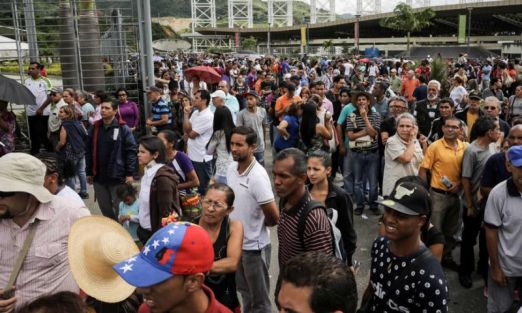
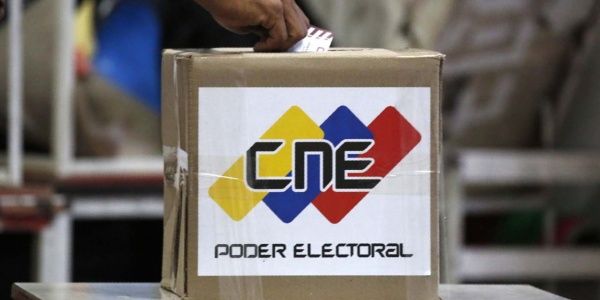
Venezuelans went to the polls three times in 2017: on 30th July to elect members of the National Constituent Assembly; on 15th October to elect the governors of 23 states and on 10th December to elect mayors for the country’s 335 municipalities.
Despite this vibrant manifestation of Venezuelan democracy, on August 25th, 2017, the Trump administration issued an executive order imposing sanctions on the government of President Nicolas Maduro. These sanctions prohibit US citizens and banks from trading Venezuelan bonds, seriously affecting country’s ability to restructure its foreign debt or to conduct its daily financial transactions and international payments, thereby severely impairing its ability to import food and medicine. As part of these sanctions, CITGO, a Venezuelan oil company operating in the United States, has also been prohibited from repatriating any funds to Venezuela.
In January 2018, the European Union, in support of Donald Trump’s aggression against Venezuela, unilaterally sanctioned seven Venezuelan officials, most of whom are representatives of the country’s public institutions.
These sanctions violate both international laws and the sovereignty of Venezuela, which as an independent country has the right to elect its representatives without the intervention of any foreign power. It should be noted that in March 2015 President Obama issued an executive order where he described Venezuela as an «unusual and extraordinary threat to the national security of the United States.»
At the beginning of 2017, the US government engineered a ferocious diplomatic offensive led by Luis Almagro, Secretary General of the Organization of American States (OAS) with the sole aim of isolating Venezuela and imposing even more sanctions. This offensive was defeated by the unity of the progressive forces present in the OAS, but Venezuela was forced to withdraw from that organization.
Between April and July 2017, the right-wing opposition launched a vicious campaign of street violence with the explicit aim of overthrowing the democratically elected government of President Maduro. This campaign resulted in 123 deaths, including 29 Venezuelans burned alive in the streets, 233 transport workers physically assaulted, destruction of public and private property, as well as attacks on hospitals and military installations.
On 1st May, President Maduro, invoking articles 347,348 and 349 of the 1999 Constitution of the Bolivarian Republic of Venezuela called the elections of a National Constituent Assembly. On 30th July, with the nation sickened by right-wing violence, more than 8 million Venezuelans voted in this election. Venezuela’s right-wing boycotted this election but the violence ended on 1st August, 2017.
Subsequently, on 15th October, there were elections for governors of 23 states. The PSUV (United Socialist Party of Venezuela) obtained 18 governors. Again a section of the opposition boycotted these elections and on December 10th, there was the election of 335 mayors. The PSUV won 304 mayoralties and once again a section of the opposition boycotted the election.
It should be noted that Venezuela’s right-wing has been calling for early general elections since they won the National Assembly elections in December 2015, but now under pressure from the US government its most extremist sector refuses to participate.
President Maduro’s response has always been dialogue so as to resolve Venezuela’s domestic problems peacefully and without external interference. Thus, a Dialogue Process between the Bolivarian Government and the Venezuelan opposition, which dates back to 2016, was organized in the Dominican Republic with the mediation of former presidents Jose Luis Zapatero (Spain), Martin Torrijos (Panama), Leonel Ferrer, a special envoy from the Vatican, and the ministers of foreign relations of the Dominican Republic, Mexico, and Chile, among others.
However, the Venezuelan opposition refused to sign the agreement for peace reached in January 2018.
The US agenda for Venezuela clearly collides with a political agreement within the framework of Democracy. The US master plan is currently in its most aggressive phase of further sanctions and an intensification of the financial blockade against the Venezuelan economy.
On 16th August, 2017, President Trump himself did not rule out the military option in Venezuela. Secretary of State, Rex Tillerson, and CIA Director, Mike Pompeo, have openly and repeatedly confirmed US objectives of strangling Venezuela from a political and economic point of view.
Venezuelans continue to bet on democracy and demand respect for the right of the Venezuelan people to elect their representatives in peace.
[1]Article published in the Liberty newspaper of the Trade Union of Industrial, Professional and Technical Services (SIPTU) of Ireland, in its February issue of 2018
[2] Marcos Garcia is first secretary of the Embassy of the Bolivarian Republic of Venezuela in London

 Observatorio de Trabajador@s en Lucha